

Connected State Therapy FAQs
Traditional talk therapy works primarily through conversation and conscious insight. Client and therapist sitting face to face, talking. CST goes further by creating specific internal conditions — a gentle altered state — where your nervous system can recalibrate and your subconscious wisdom can emerge naturally. This allows two things: firstly, it makes therapy a relaxing experience; and secondly, people often experience insights and revelations that they would not have known to bring.
Think of it as similar to that peaceful state just before sleep, or deep meditation — you’re completely aware and present, but relaxed enough that your usual mental chatter quiets down and you can assume a higher perspective. We use mindfulness, gentle guidance, and therapeutic sound to help you access this naturally aware and receptive state. You’re always in control and always conscious. This state simply allows deeper material to surface that might remain hidden during regular conversation. And it lends plasticity to processing what emerges. It’s not mysterious or mystical — it’s working with how your nervous system naturally functions when it feels safe.
Most clients notice shifts within the first few sessions — often describing feeling “lighter” or “more spacious” in themselves. However, meaningful transformation unfolds over time. I typically recommend a minimum of 8 sessions to get a sense of how it works with the deeper patterns. How long a client stays depends on their circumstances and how far they would like to go. The pace is always determined by what serves your needs, not a predetermined timeline.
We usually begin with you lying down and getting comfortable, followed by a brief grounding practice and check-in: what’s present for you, what’s been surfacing since our last session, any insights or challenges. We may recap on the previous session. Together we identify “seeds” that might want to germinate during today’s work. From there, the session unfolds organically — sometimes we’ll explore what emerges through dialogue, sometimes I’ll facilitate your own process. Therapeutic sound is usually woven throughout. Sessions close gently, many clients leaving sessions describing feeling lighter, clear and deeply grounded, even when we’ve touched difficult material.
Absolutely. CST isn’t about forcing your mind to be quiet or “doing it right.” The gentle altered state we create isn’t dependent on your meditation skills — it emerges from specific conditions we create together: safety, sound, somatic awareness, and skilled guidance. Your nervous system knows how to access these states; my role is to create the environment where it can. Many clients who’ve struggled with traditional meditation find CST remarkably accessible because we’re not fighting against your active mind — we’re working with your whole system in a way that naturally allows settling. A side-benefit of this work is that you gain tools that you can apply outside of sessions.
CST is particularly well-suited for trauma because it prioritises nervous system regulation before any processing begins. Traditional trauma work can sometimes reactivate distress by approaching material while you’re still in a triggered state. CST takes a different approach: we first create the internal environment – safety, regulation, connection to Self — where trauma can be touched without retraumatising. The altered state allows you to access and process difficult memories while remaining resourced and grounded. That said, this is sensitive work requiring the right conditions and timing. The line of enquiry isn’t led by the therapist, but by your instinct. In our initial consultation, we’ll determine if CST feels appropriate for your specific circumstances.
When we try to “fix” symptoms — anxiety, depression, relationship struggles — we’re often trying to eliminate messengers without understanding their message. These symptoms point to something deeper: unprocessed experiences, unconscious beliefs, fragmented parts of ourselves. Integration means reading these messages and bringing these hidden aspects into conscious awareness and wholeness. When we address the root causes, symptoms naturally shift — not because we’ve fought them, but because we’ve resolved what was creating them. It’s the difference between managing a life you’re struggling with versus transforming the foundations of your experience.
Imagine trying to have a meaningful conversation while running from danger – impossible, right? Yet this is what we often attempt in therapy when our nervous system is in fight-or-flight mode. In that way, we can be locked up, or avoid, or even re-traumatise. CST recognises that transformation requires the right internal environment. We use specific techniques —mindfulness, somatic awareness, sound, breath — to help your nervous system shift from reactive to receptive. In this state, your body can literally process and integrate experiences differently. You’re not just thinking about change; your neurology is rewiring. This isn’t abstract theory — clients report feeling these shifts in their body, their sleep, their stress responses, and the patterns that show up in their lives.
Absolutely. Many of our deepest patterns live in how we relate to others — how we connect, withdraw, defend, or abandon ourselves. CST can illuminate these relational patterns with particular clarity because in the altered state, you can often perceive dynamics you couldn’t see before. You might discover the childhood origins of your difficulty setting boundaries, or understand why you keep choosing unavailable partners. What’s powerful is that these aren’t just intellectual insights — they’re felt-sense revelations that we can process and integrate. This creates natural shifts in how you show up in relationships.
This is one of the most common experiences clients bring to CST. Previous therapy may have given you valuable insights and coping strategies, but you still feel the same. Reactive patterns, the same core struggles – something deeper hasn’t shifted. CST is designed specifically for this: accessing and transforming the subconscious material and nervous system patterns that talk therapy often can’t reach. Many clients describe previous therapy as learning about their patterns, while CST helps them actually change those patterns at their source. Both have value; CST is particularly powerful for moving beyond insight into embodied transformation.
Not at all. CST is grounded in neuroscience, psychology, and how the human nervous system functions. The “altered state” we work with is a natural, neurological phenomenon – similar to what happens during deep meditation or just before sleep. Its features are observable, for example with EEG or fMRI. While the work can certainly open doors to spiritual experiences if that’s meaningful to you, CST doesn’t require any particular beliefs. What it does require is openness to the process, and to the possibility of experiencing yourself differently than you have before – to let your subconscious reveal what it needs to, to trust your own inner wisdom. Science and mystery aren’t in conflict here; they’re complementary paths to the same destination: your wholeness.
Short of trying it, the best way to know is to book a free 15-minute discovery call. We can explore what you’re seeking, whether CST feels appropriate for your circumstances, and whether there’s a natural fit between my approach and your needs. Many people who come to me have tried conventional therapy with mixed results, and sense their patterns run deeper than conscious awareness and talking can access. It’s particularly suited to those who don’t just want to manage symptoms but are ready for genuine transformation – even when that means touching difficult material. One feature of CST is that it is highly responsive to your needs. So it is likely to be a good fit for most.
The changes clients report often surprise them in their depth and breadth. Many notice anxiety or depression lifting — not through effort, but through genuine resolution of underlying causes. Relationship patterns shift as old wounds heal and new understandings become possible. Physical symptoms — chronic pain, sleep issues, stress-related conditions — frequently improve as the nervous system recalibrates. Perhaps most significantly, clients describe a fundamental shift in their relationship with themselves: from self-criticism to self-compassion, from fragmentation to wholeness, from reacting to life to responding with greater choice and presence. These aren’t separate changes — they flow from the same source: deeper integration.
CST continues working after our sessions end. Your nervous system and psyche continue processing and integrating, often in surprising ways. I’ll usually offer suggestions — a particular awareness to notice, a practice to explore, a question to sit with — but these aren’t “homework” in the traditional sense. They’re invitations to deepen what’s emerging. Many clients find themselves spontaneously noticing patterns they couldn’t see before, or responding differently in situations that used to trigger them. Integration happens both through our sessions and through your lived experience. The most important “work” between sessions is simply continuing to live your life with a calling-back to the session space and gentle awareness of what’s shifting.
That nervousness is completely natural — it shows healthy discernment. CST does ask something of you: trust in the process, willingness to open to what’s been avoided, and courage to meet yourself more fully. These aren’t small asks. What I can offer is this: CST is fundamentally gentle. We only ever go at the pace your system is ready for. The altered state we work with is deeply safe — you’re always conscious, always aware, always in control. And you’re not alone in this; I’m holding the space, guiding the process, ensuring safety throughout. Many clients tell me that their fears prior to their first session were alleviated within a short time in that first session. The initial nervousness transforms into something else: relief at finally being met where you actually are, and the revelation of the possibility of something new.
Psychotherapy FAQs

Psychotherapy offers a confidential, non-judgemental, safe space for you to reflect on and explore your thoughts, feelings, and experiences. My role is to support you in this process by holding the safe space for you, by asking questions, and by offering reflections. In this way, we work collaboratively to reach deeper understandings that have the potential to transform your experience.
Psychotherapy is for everyone. It is incredibly beneficial for us to have a dedicated time and space in which to speak aloud and receive support in exploring the contents of our psyche, and in doing so to identify, understand, process, and integrate. That said, often people will seek out psychotherapy when some acute circumstance has arisen. That is fine also. These circumstances may include trauma, anxiety, depression, unhelpful or undesirable patterns in life, relationship breakdown, low confidence, or a feeling of lostness or stuckness in life.
Psychotherapy may feel different for everyone – there is no right or wrong way to feel. Psychotherapy represents a safe place to let your feelings out and share what’s on your mind or in your heart. That may or may not be challenging at first. When someone whose intention is to understand really listens to you, without judgement, it can be very powerful. Feeling heard, seen and understood can bring about emotion. As you get better acquainted with the process, you may find a sense of release, sanctuary, or empowerment in your sessions. I am here to help you process and cope with whatever comes up.
Primarily, the intention is for you to have the opportunity to explore through conversation the issue or concern you want to work on. I will support you with this, perhaps by asking questions or offering reflections. If appropriate, there may be specific tools (including sound) and exercises we can use to work through thoughts or feelings, or to better equip you to navigate circumstances in your life.
My role is to listen, ask questions, and to offer reflections about what you have shared. To collaborate with you in deepening understanding. In order for this to take place, the safety of the space is sacred. So I will not tell you what to do. This might feel difficult to begin with, but it is usually the case that engaging in this process makes navigating the circumstances in your life much more clear to you, and so you will find your direction in a much more deep and meaningful way.
A standard psychotherapeutic session with me lasts one hour. This is how most clients work with me. We may discuss longer sessions where it would be helpful. If we are using Sound Therapy alongside talking therapy (for example, if we are working through trauma), I may recommend 90 minute sessions; if we are doing an intensive couples process a session may be 4 to 6 hours; or if we are opting for a Personal Deep Healing Ceremony, a session can run up to 8 hours. Timing will always be agreed prior to the session.
I recommend regular attendance, ideally on a weekly basis for all we gain from that continuity. In some cases, you may wish for greater frequency. If once per week is not possible, we can look at sessions every second week. Sessions less frequent than that can have difficulty building movement.
Psychotherapy can be short or long term. Some people choose to come to work on one particular issue, while some people choose to use psychotherapy as part of their long-term self care plan and attend for years. The number of sessions you have will depend on your needs and preferences, the type of therapy we are engaging with, and the depth and complexity of the issues you want to work on. It is unusual for any course of therapy to last fewer than 6 sessions.
Yes, we can work online. I do however recommend working together in person if possible.
Booking in a first session is the best way to overcome the hurdle that some people feel in their journey to taking up therapy. In our first session, we will have the opportunity to meet; you will get a sense of how I work; you will be able to ask me any questions you might have; and I will invite you to speak about what brings you to therapy and maybe share something of the context and history of your experience. There won’t be any pressure to jump right in to anything you are not prepared for.
If you feel you would like to end your sessions, please let me know. I will invite you to discuss the decision and together we can consider how and when to stop. It is best not to stop suddenly – therapy can at times feel unsettling and it is worth considering whether this is something that would be beneficial to work through.
Yes. The legal limitation of this is where there is serious threat of danger. Additionally, as a psychotherapist, I have weekly sessions with a supervisor in which I may raise elements of client sessions. If I do so, it is always anonymous. Safety is the foundation of a therapeutic relationship: it is likely that you will want to share private matters, some of which you may have never shared with anyone else. I take seriously my role in helping you feel secure that what you share will not be shared elsewhere.
Relational Therapy FAQs
The first step is to simply get in touch with me via email or telephone. From there, we will arrange an initial conversation. This will give you the opportunity to find out more about me and how I work, and to share with me more about your circumstances, hopes, and dreams. This will help determine the path we take together.
Sessions will be structured in accordance with your circumstances.
For individuals and personal relationships, our work together may follow the format of a weekly session, or we may find that a more intensive approach – for example a 5 hour private process – will be more effective in creating breakthroughs and embedding new ways of relating.
If you are enquiring on behalf of an organisation, again we will devise a bespoke approach that best supports the needs of the organisation and the people within.
This is not unusual and your drive for growth or movement cannot be ignored. It is absolutely appropriate and constructive for only one party to attend relational therapy. Doing so will be supportive to the mental and emotional wellbeing of that individual, and it will also be supportive to the healthy functioning of the relationship. So if this is the case, please reach out.
No – not by any stretch. Every type of relationship can benefit from greater self awareness, mutual understanding, empathy, and communication. Relational therapy is of benefit to people in all types of relationship: romantic, familial, friendship, professional, and also self (attending as an individual).
Absolutely. The foundation of the way I work is in the creation of a safe space. As with all of the services I offer, you can feel perfectly assured of confidentiality and non-judgement. Nothing that you share will be disclosed or discussed away from our sessions. The only exception to this is that I am obliged to disclose to the appropriate agency if there is a serious threat. I work in accordance with the codes of ethics of the BACP.

Gong Meditation FAQs

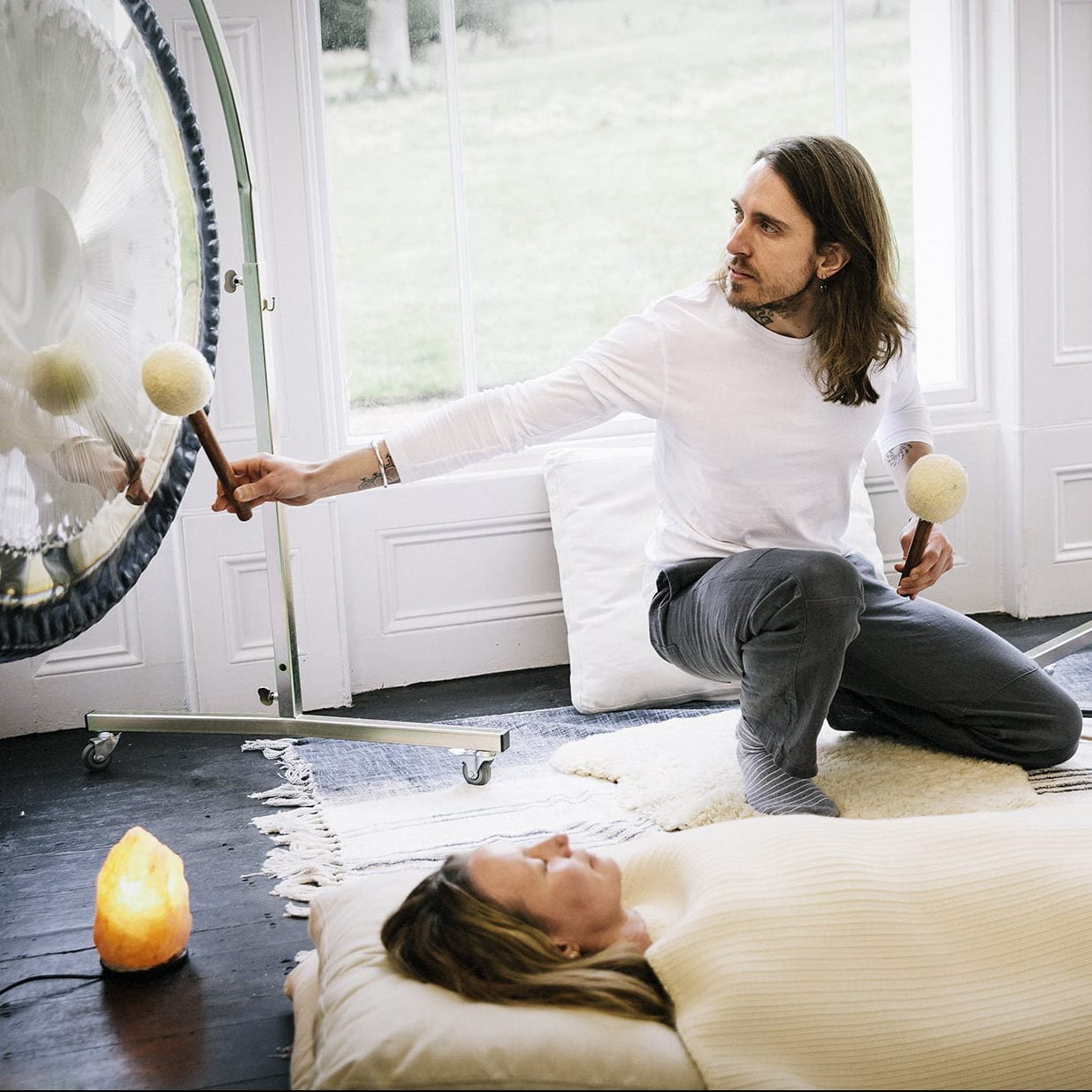
My intention is to focus gently but powerfully on the benefits of the deep meditative state. Other instruments such as bowls, handpan drums, rattles, whistles and so on all offer very beautiful aural experiences but equally each sound is a fluctuation or disturbance. We are looking for focus – the state of Samadhi, or oneness with the object of meditation. Stillness, singularity, and total presence. So to bring the experience away from the ears and the mind, and deep into our body and spirit. Additionally, unlike these other tools, gongs uniquely offer extremely low frequencies, which work deeply.
Absolutely not. The term Gong Bath is a slight misnomer – technically we should refer to “gong meditation”. Gong baths can take place in water absolutely – but the vast majority do not. The term has come to refer to the idea of bathing in the sound of the gong. Our “Gong Baths” will be in the warm and dry, under blankets. So I suggest you wear loose, comfortable clothing.
Whatever you need to feel comfortable. I suggest:
- Something soft to lie on – a roll-out mattress, mat or sheep skin for example. The softer the better
- A pillow
- A blanket or duvet
- A bottle of water
- An eye mask if you like
- An optional cushion for under your feet and/or under your knees
- A journal if you wish.
We will be creating a very sacred space together. So I invite you to come in to the space with your presence, an open heart, and an open mind. That said, whatever you come with will be welcomed with warmth, care, and understanding. All that will be required of you is to create a comfortable space in which to lie down. If you wish you can spend time prior to the gong meditation exploring intentions, but then being prepared to let the intentions.
It’s best not to arrive with a fixed idea of how you might experience your gong meditation. It’s a deeply personal experience, best received by totally submitting to presence with the experience.
You will arrive, be welcomed into the circle. There will be the invitation to introduce yourself as we go around the circle. I will then talk a little about the process and offer some suggestions as to how you might be with the experience. There will then be a guided meditation of some kind, leaving you with the gong element. At the end, I will guide you back into the room, and the circle will open for optional sharing. We will then close the circle and the evening will conclude. It will be an evening of warmth, connection, and nourishment. If you have any concerns please get in touch.
Congratulations! Please get in touch before booking. Gong meditations can be deeply soothing and nourishing but I need some more information to determine the most suitable way for you to receive the gong meditation. It may not be as part of an open group.
If you have special sensory needs or if you feel that it’s likely something difficult may arise for you (for example, if you have a history of trauma), it may be advisable to work one-on-one for a few sessions before joining group gong meditations. If you have any questions or concerns, please get in touch.
